Lean
My product discoveries connect viable business impact with desirable products and services by prioritizing and validating assumptions with customer research for effective cross-functional collaborations and stakeholder alignments.
Lean Experimentation & Validation
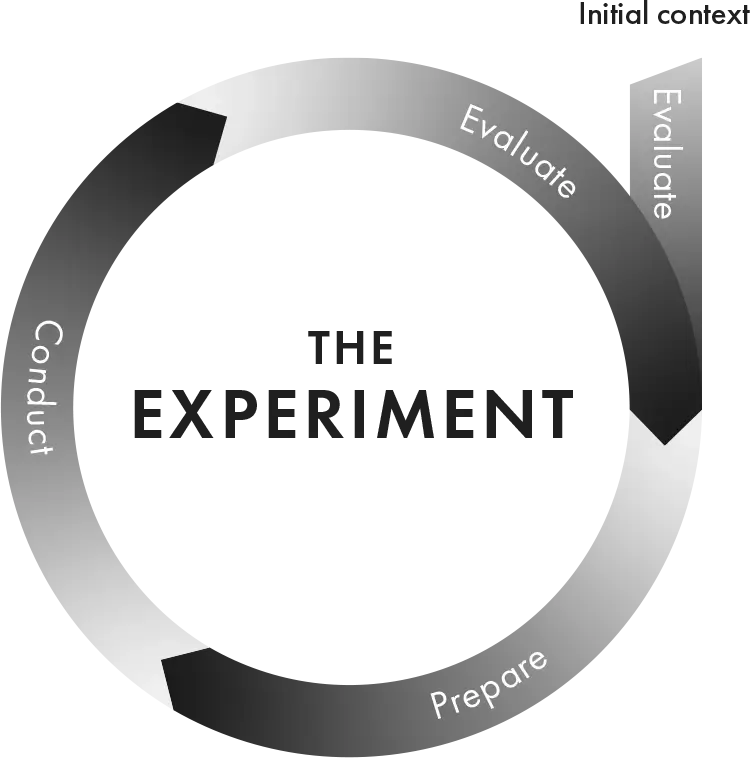
Prior to the market launch of a new product, the main purpose of Product Design is to minimize uncertainty for subsequent investments and to avoid wasting resources. To achieve this, the extended Double Diamond process, shown before, is broken down into a series of innovation experiments.
An established method for innovation projects to plan and execute experiments is the Build-Measure-Learn feedback loop, popularized in Eric Ries’ book The Lean Startup. Casually said, the loop is about getting out in front of real customers and stakeholders as early as possible, gathering their feedback on hypotheses, and adapting the design approach if needed.
The Lean Startup methodology suggests to build an idea, measure the market response, and learn from the data. The loop then starts anew with adapting the built of the idea. This enables startups and other small budget endeavours to use their scarce resources on gaining the relevant insights early enough, eventually building successful products.
But the model describes a loop! Where to start the work? The internet provides us with an abundance of information: studies, papers, trend reports, demographics, statistics, best practices, etc. It makes sense to start most projects by taking some time to learn about the initial context and see if data about customers and technologies of high potential is available.
Therefore, I adapted the loop to start with Learn, shifted its focus on experimenting and renamed the phases as Evaluate, Prepare, and Conduct, making the wording more flexible and open to qualitative feedback, too.
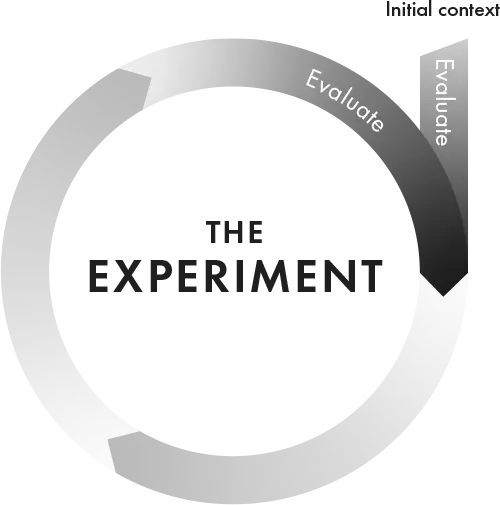
Evaluate
Whether it is based on initial desk research with existing material or drawn from the measured data from one's own experiment, the Evaluate (Learn) phase generates insights into the customer’s understandings, needs and behaviors (desirability), technological opportunities (feasibility), and financing mechanisms (viability) of a product or business model. It is at this point that teams decide on holding, adapting, or even pivoting the direction of their product development and next experiments.
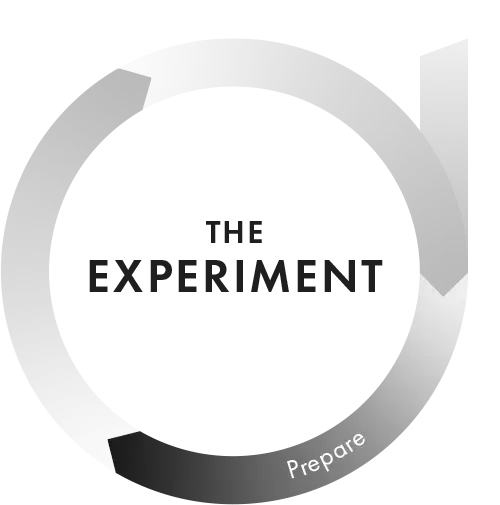
Prepare
Preparing an experiment (Build) always starts with transforming an assumption, most likely the riskiest one, into a precise hypothesis, summarizing the assumed outcome, the type of experiment, and the suitable metric with a threshold to verify or falsify.
The central part of the experiment is the object to be tested and may differ greatly from type to type. In UX & UI Design, the most common test object is a paper, digital or even coded prototype.
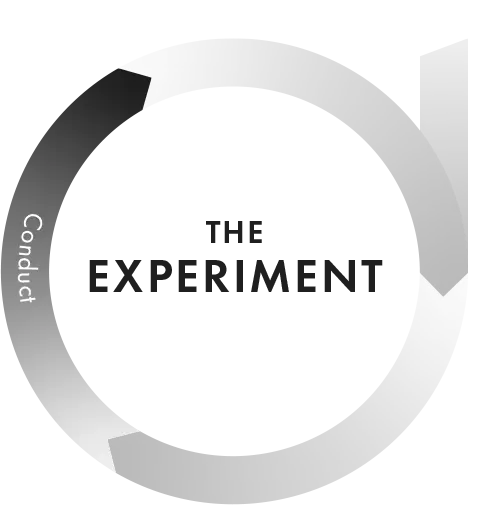
Conduct
In the Conduct (Measure) phase, it is time to gather feedback as qualitative or quantitative data. And although the term “Measure” implies a technical approach, many research methods require human moderation.
Some parts in a business model need to be validated with experts. But only real customer feedback enables us to assess desirability, usability, and overall user experience. Finally, the loop starts anew, incrementally decreasing risk and increasing the fidelity of the next experiment.
“I had the pleasure of working with Oliver on several projects as he supported our team at Volkswagen with his strong competence in design concepting, User Experience (UX) and digital prototyping. His profound knowledge in lean, user-centered design and his excellent communication skills help him to accelerate projects and lead junior designer through the design process. It is always great to work with Oliver and I am looking forward to new projects with him in the future.”

Sebastian Philipp
Team Lead Business Innovation Studio at Volkswagen Group Services (then)
Tell Me Your Challenge
Elevate your product with expert services in Discovery, Strategy, and Research. Reach out today to discuss your project goals.